The Yardstick, part 1 of 6 · 8 min
The price tag on generosity
By Steven Wensley, MA in history, and poet.
Imagine a community where people build something together. Some bring their hands, others bring materials, and the community offers a bed and a simple meal as thanks for the help. In any healthy culture that is called hospitality, and it is older than the coin. But in Danish tax law there is no such thing as a free helping hand once the community gives something back. Here it is called remuneration in kind, in everyday Danish a naturalievederlag, and it must be taxed.
This text is both an indictment and a manual, and it comes in six parts. Let me say at once whom the indictment does not concern. It does not concern our welfare state. It does not concern the nurse, the caseworker or the municipality. It concerns a yardstick: the measure of value our rules have borrowed from the market and hold up against everything, including what was never for sale.
The yardstick
Two sections of Danish law, read on the same day.
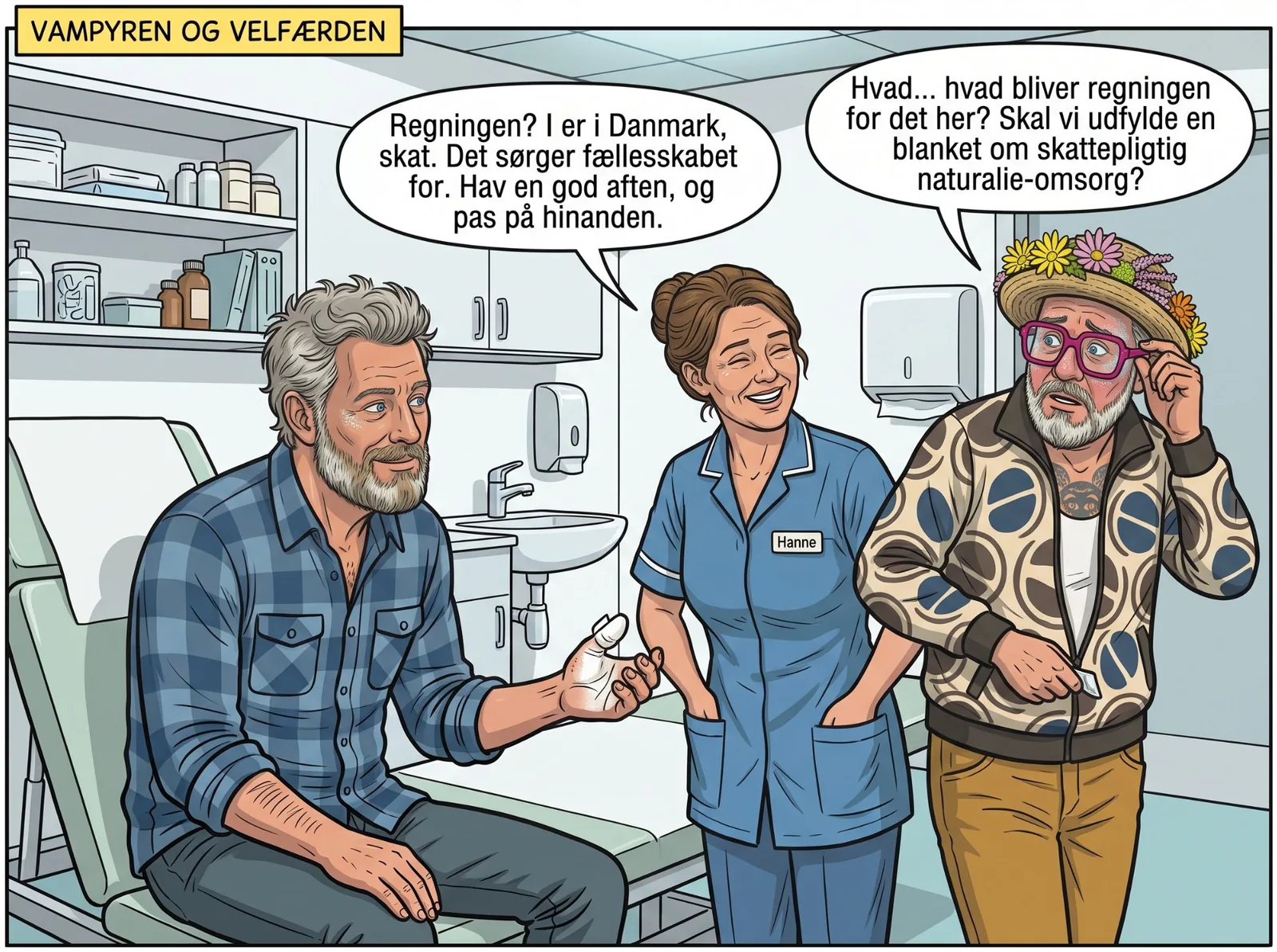
Section 81 of the Danish Health Act says that hospital treatment is “free of charge for the patient”.1 That is Hanne at A&E, putting three stitches in a thumb and sending us home without a bill.
Section 16(3) of the Danish Tax Assessment Act says that a benefit you receive for your work must be valued at “the value it would be assumed to cost the taxpayer to acquire the benefits in ordinary free trade”.2 That is the guest bed.
The French anthropologist Marcel Mauss wrote his essay on the gift in 1925. He found three obligations in it: to give, to receive and to give back. And he saw something we have forgotten: that the welfare state itself is built from the morality of the gift. “All our social insurance legislation, this state socialism already realised,” he wrote, “is inspired by the following principle: the worker has given his life and his labour to the community on the one hand and to his employers on the other, and those who have benefited from his services are not quits with him by paying him his wage.”3
In the market you are quits once the bill is paid. That is the whole point of a trade. In the welfare state you are not quits, and that is why Hanne stitches. Mauss's enemy was not the state. It was what he called “the cold reason of the merchant, the banker and the capitalist”.
It is that reason that has crept into our rules. Not out of malice. The welfare state simply has no measure of value that is not borrowed from the market. When it has to assess a bed, a carrot or an afternoon with a hammer, it asks the only thing it knows how to ask: what would it have cost in free trade?
The gift culture that had to ask
In 2011 a foundation asked the Danish Tax Council for a binding ruling.4 The foundation ran a course and cultural centre, and it described itself in these words: “The foundation's work is based on volunteering and gift culture.” Three times a year the centre held work weeks, and most volunteers worked nine weeks a year, 20 to 25 hours a week: the work weeks, and a summer of kitchen, cleaning, reception and teaching.
Nobody had reported them. The foundation asked on its own, because its management wanted “to make sure that all applicable rules are followed”. And note what the volunteers did to be on the safe side. They were not given their food. They paid 180 kroner a week for it themselves. They paid 200 kroner a week to sleep in small rooms with a shared kitchen and bathroom and in camping huts, which the centre itself said could not be let. And they paid 150 kroner a week for the courses they took part in.
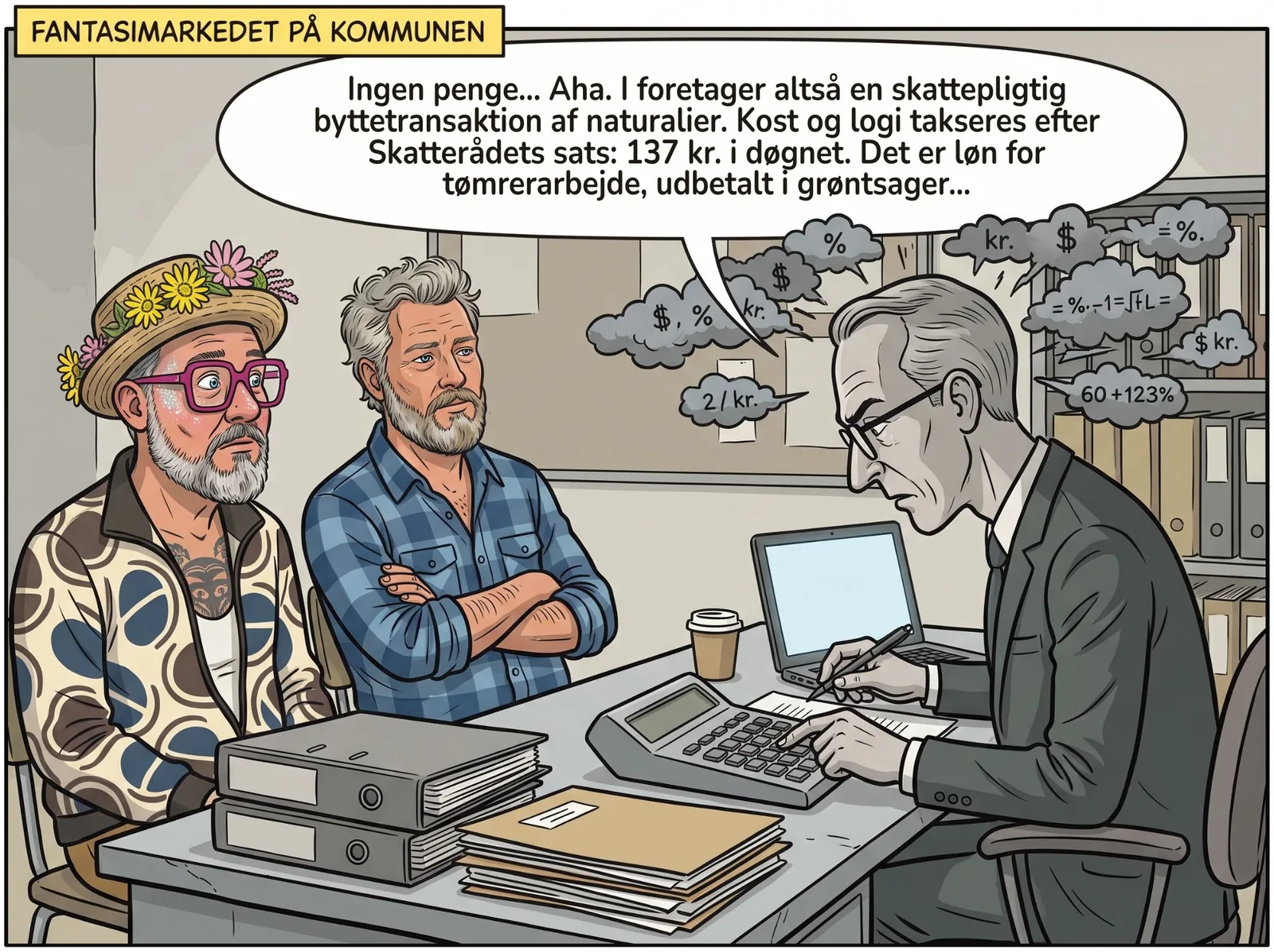
The answer, which the Tax Council adopted from the ministry, is a little gem of market logic. The volunteers were not employees, because they received no wage. But they had “committed themselves to providing personal work”, and so the food and the bed were “remuneration in the form of benefits in kind”. The basis of taxation was “as a starting point” the market value. They were not volunteers enough to be free, and not employees enough to get the employees' tax exemption for free meals at a temporary workplace.
The answer was yes. No tax. What they paid themselves was enough, and the ministry wrote that the 200 kroner were approved “on the basis of a specific assessment”.
But the answer is not the point. The question is. A gift culture had to ask the state whether 200 kroner a week for a bed in a camping hut was enough for the gift not to be a wage. And to be allowed to be volunteers, the volunteers had to pay for their own dinner.
For comparison, the Tax Council has a fixed rate for a farmhand who lives and eats on the farm: 50,090 kroner a year for board and lodging. That is 137 kroner a day.5
The friend is a source of income
The gift fares no better outside the community's walls.
Give your child 80,600 kroner in 2026, and it is free of gift tax.6 Give your friend a gift larger than an ordinary birthday present, and your friend must enter it on their tax return in box 20, “Other personal income”. And what is the gift worth? Skat.dk answers the way the yardstick always answers: “The value of the gift must be set at its trade value”.
In the Danish State Tax Act of 1922 the word “Gifts” stood in the same list as “fixed salary”, “benefits in kind” and “pension”, and it is still the section the Danish Tax Agency points to when a gift is to be taxed.7 The birthday present goes free, but only “by practice”, and the limit is not an amount. It is an assessment of “the level that is natural in the circumstances for an occasional gift”.
The loveliest part is that you cannot say no thanks either. If your friend discovers afterwards what the gift costs in tax and gives it back, the official tax guide is brief: “Such a renunciation cannot normally be given any significance for tax purposes.”8 Mauss's second obligation, the duty to receive, has found its way into tax law. Just not out of love.
The room that became a tenancy
The Danish Rent Act has its own version of the yardstick. Section 1(2): “The Act applies even if the rent is to be paid with something other than money, including work.”9
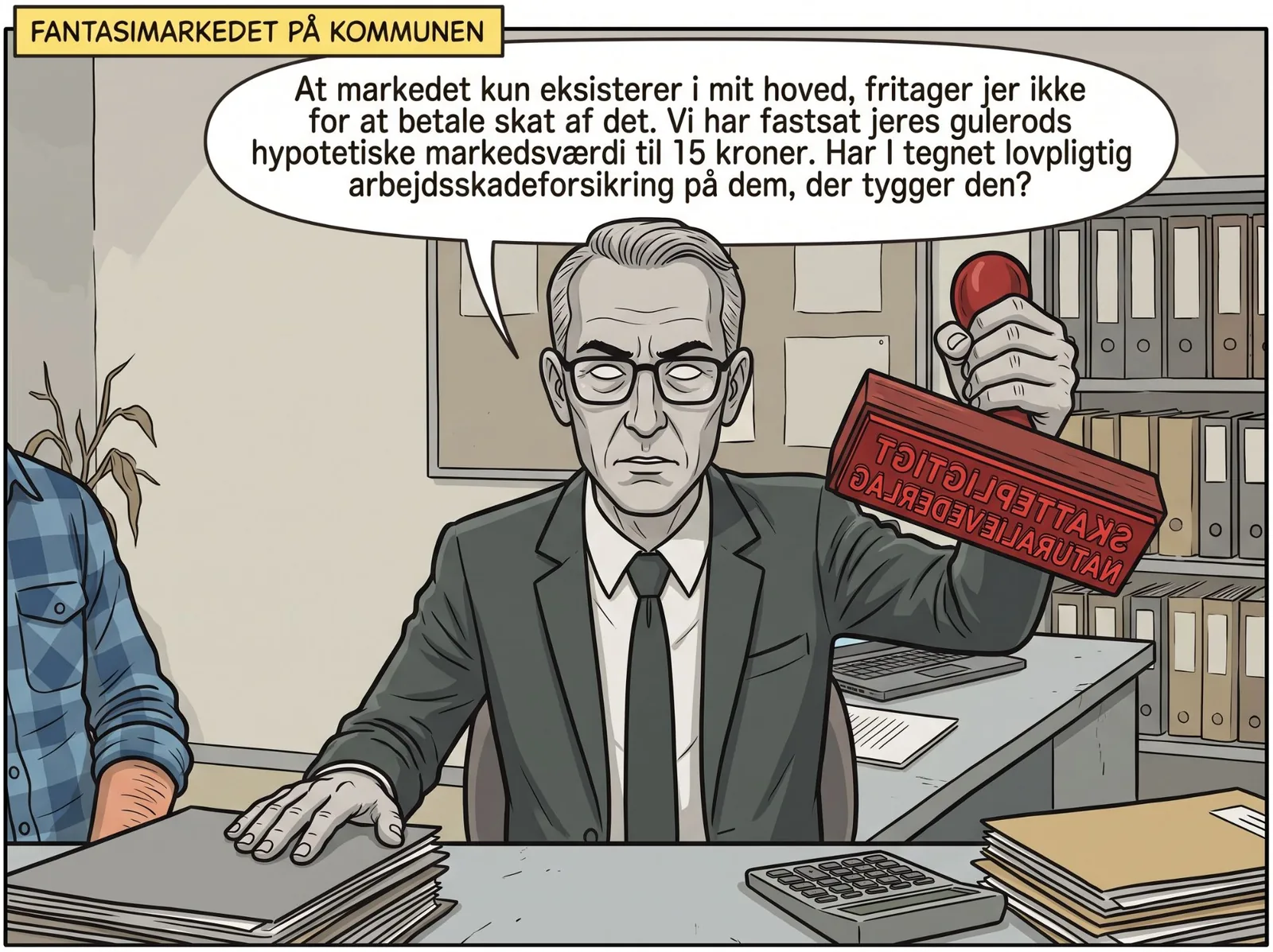
Let me be precise, because that section is worse in rumour than in reality. If you lend your guest bed to a friend, it is a loan, and loans are outside the Act. A sofa and a shared dinner are not a tenancy. But if you give someone a room of their own in return for tending your garden or mending your roof, and the room is the main thing in your agreement, you may have created a tenancy. With protection against eviction. If, on the other hand, the work is the main thing, it is not a tenancy. Then it looks like something else, namely employment.
So the line between the gift and the contract is not drawn at what you give. It is drawn at whether you have agreed to give back.
The guest from the other side of the world
For a guest from a country outside the EU/EEA and the Nordic countries, the yardstick becomes a border barrier.
Since 2021 a foreigner on a visa or visa-free stay may in fact do unpaid voluntary work in Denmark.10 That is a relaxation, and it should be said. But at the Danish Agency for International Recruitment and Integration, unpaid means that you may not receive remuneration, “neither in the form of wages nor other benefits”. The only exception is minor perks that all volunteers get, “e.g. festival wristbands”, or meals during the work.
The festival wristband is a gift. The bed is a wage.
If a community invites an American WWOOFer to build a straw-bale house for three weeks in return for board and lodging, it is illegal work. The guest risks a fine and expulsion, and the host a fine or up to two years in prison.11
The Nordic countries
This is not a special Danish zeal. The Swedish Tax Agency writes: “Om du gör en tjänst åt någon med kravet på en gentjänst så är båda tjänsterna skattepliktiga” (if you do someone a service on condition of a service in return, both services are taxable).12 Trade three weeks of building work for three weeks of lodging on a Swedish smallholding, and the value of the room goes on your tax return. The owner pays in practice no tax on the letting. The one who built does.
In Norway the dugnad, the communal work party, is still protected. Free work done by friends is tax-free. But if you work for a tax-exempt association and receive more than 10,000 Norwegian kroner a year, in money or in kind, the entire amount is taxable.13 Not what is over the limit. All of it. The first krone over turns all the others into wages.
What the yardstick cannot measure
Why do we do this to ourselves? The answer is not that the state is short of money. I will come back to that in part four. The answer is that the rule was built for something sensible: so that a wage cannot hide as a gift. Otherwise any employer could pay in board and lodging and save the tax.
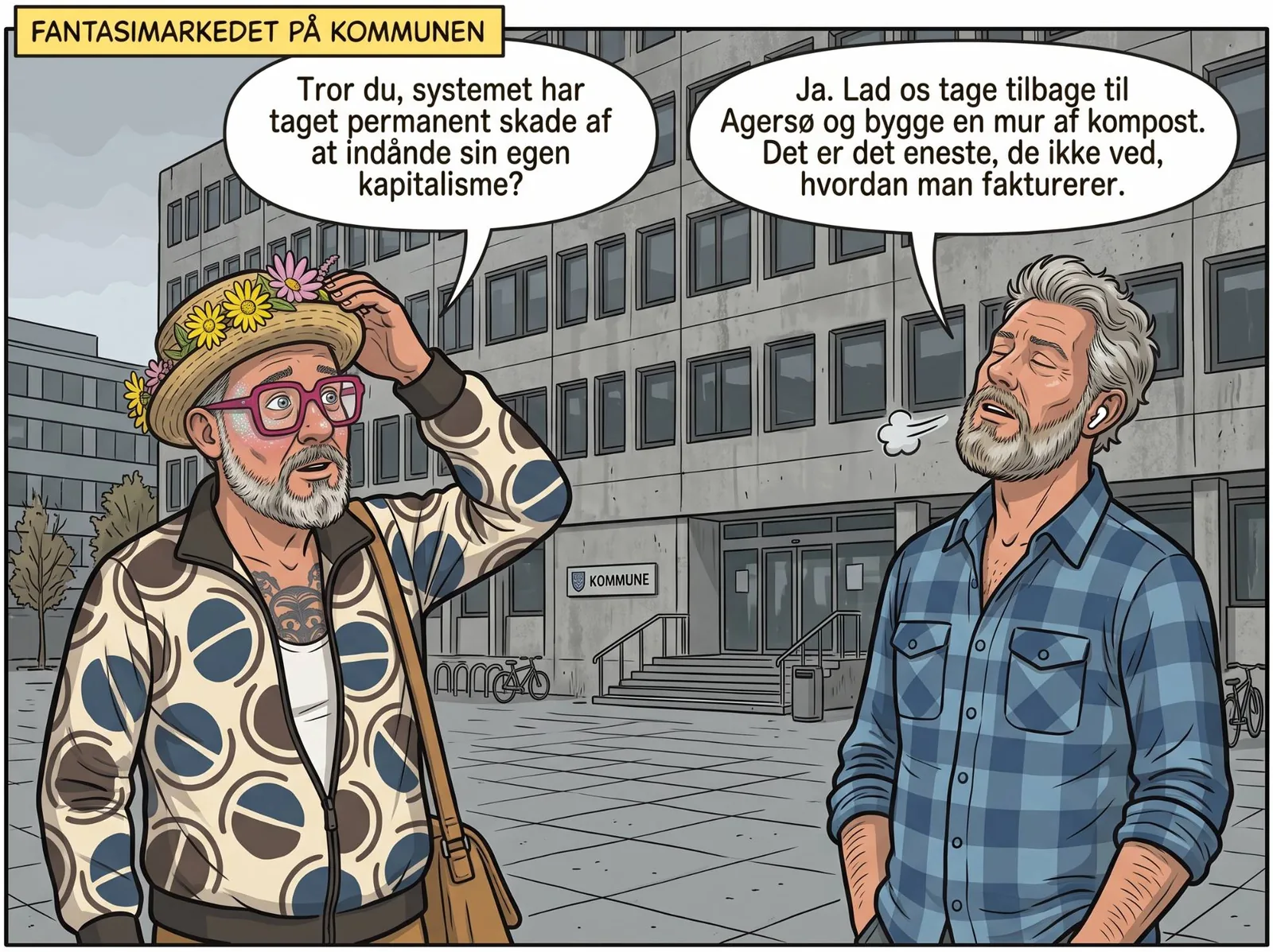
But the price is that the gift can no longer be a gift. So that the wage cannot disguise itself as a gift, the gift has to prove that it is not a wage. And the only way to prove that is to put a price on it.
In the next part we follow the yardstick down into the unemployed volunteer's paint bucket, where the same measure is held the other way round.
1. Danish Health Act, Consolidated Act no. 275 of 2025, section 81. retsinformation.dk
2. Danish Tax Assessment Act, Consolidated Act no. 1500 of 24.11.2025, section 16(1) and (3). retsinformation.dk
3. Marcel Mauss, Essai sur le don, 1925. The section «Les trois obligations: donner, recevoir, rendre» and the conclusion: «ceux qui ont bénéficié de ses services ne sont pas quittes envers lui avec le paiement du salaire» and «la froide raison du marchand, du banquier et du capitaliste». The translations are mine. The French text · English edition: The Gift.
4. Binding ruling of the Danish Tax Council SKM2011.723.SR, decided 25.10.2011. info.skat.dk
5. Executive Order no. 1334 of 20.11.2025 on the valuation of free board and lodging for 2026, section 1. The rate applies to farmhands etc., domestic help and hospital staff. retsinformation.dk
6. Danish Tax Agency, «Gaver: Så meget må du give i 2026» (Gifts: how much you may give in 2026). skat.dk
7. Danish State Tax Act, Act no. 149 of 10.4.1922, section 4(c), in the original spelling. The official tax guide (Den juridiske vejledning) C.A.6.6 (gifts between people who are not close family are taxable as income under the State Tax Act, and occasional gifts «beskattes efter praksis ikke», are by practice not taxed) and C.A.6.3.1 on occasional gifts. C.A.6.6 · C.A.6.3.1
8. The official tax guide 2026-2, C.A.6.1.1, «Beskatning af gaver» (Taxation of gifts). info.skat.dk
9. Danish Rent Act, no. 341 of 22.03.2022, section 1(2) and (3), and the explanatory notes to section 1 in bill L 47 (2021-22): the tenant must have «en selvstændig og eksklusiv brugsret» (an independent and exclusive right of use) to at least one whole room, the right of use must be «den væsentligste del i en samlet aftale» (the most important part of a combined agreement), and «vederlagsfri benyttelse i form af lån» (use free of charge in the form of a loan) is outside the Act. The Act · the explanatory notes
10. Danish Aliens Act section 13(2), inserted by Act no. 2191 of 29.12.2020. SIRI, «Ulønnet frivilligt arbejde» (Unpaid voluntary work): the work must also be for a formally organised association with a charitable purpose, without a commercial aim and without replacing paid labour. nyidanmark.dk
11. Danish Aliens Act, Consolidated Act no. 1183 of 25.09.2025, section 59(3) (the foreigner: a fine or up to 1 year in prison) and (5) (the one who employs: a fine or up to 2 years in prison). Expulsion is a risk, not an automatic consequence. retsinformation.dk
12. Skatteverket, «Byta tjänster» (Swapping services). Same page: anyone who helps a friend «utan något krav på motprestation» (without any requirement of something in return) is not taxed. skatteverket.se
13. Skatte-ABC 2025/2026, B-10-4 «Vennearbeid» (Work by friends), and the Norwegian Tax Administration on pay from voluntary organisations: “If you earn over the limit from one organisation during an income year, the entire amount is taxable.” Skatte-ABC · Skatteetaten