Articles · 12 min
Debt as a weapon of mass destruction: Why the fiat economy fears self-sufficiency (and why we must forgive its foot soldiers)
By Steven Wensley, MA in history, and poet.
Money is not merely a neutral means of exchange, as we learned in social studies at school. In modern society the currency of the state is its most fundamental and inalienable instrument of power. To understand why an otherwise well-functioning and wealthy society reacts with an almost absurd legislative resistance to communities built on gift economy, time banks and independence, we have to see the currency for what it really is: an absolute precondition for the survival of the state.
If the population proves that it can successfully manage its own resources, share out the work and create welfare and security through informal networks entirely outside the till, the money of the state becomes superfluous. And if you make the money of the state superfluous, you remove the foundation of the tax base on which power rests. Modern monetary theory makes an even sharper point: A state that issues its own currency does not, at bottom, lack the money of its citizens. What it lacks is for its citizens to need its money. It is the tax demand that forces all of us to get hold of kroner, and that demand makes the krone the common measure of value in society. The zealous hunt of the system for those who try to break out of the monetary hamster wheel is therefore not rooted in a sense of justice. It is rooted in a deep, systemic existential fear.1
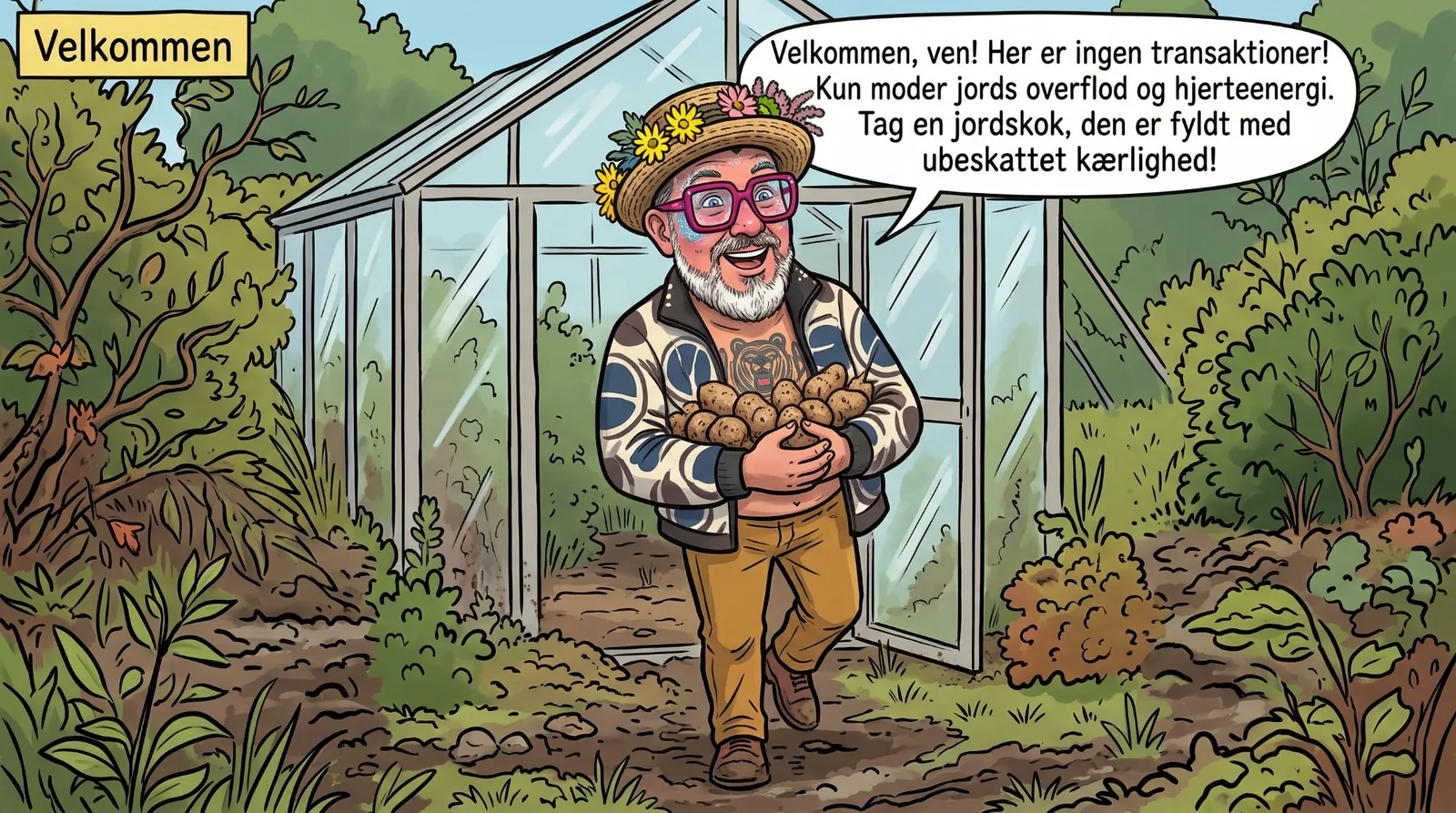
The global debt machinery and the local oppression
This is not an isolated Danish phenomenon. Historically, debt has time and again functioned as a structural weapon of mass destruction and a means of forcing through marketisation.2 Looking at the Global South, international financial institutions such as the International Monetary Fund (IMF) and the World Bank have for decades used debt to push developing countries away from local self-sufficiency. Countries where smallholders grew food for the local market were subjected to massive structural adjustment programmes that forced them further into a global market economy. Why? Because the programmes were meant to bring in the “hard currency” (dollars) the debt demanded, and debt servicing was not up for negotiation. In several of the countries, export crops (cash crops) displaced the growing of food for local consumption.3
The dynamic in Denmark is, at its core, driven by the same logic. The Danish state today forces permaculture communities, swap markets and citizen initiatives into a hard-nosed market logic.4 The law imposes a fictitious market price on a bed and a simple meal in a voluntary association, and an association that wants to be on the safe side has to ask the state for permission itself.5 It follows the same logic as at the IMF: to protect and maximise the tax base on which the whole European fiat system rests – a system that is heavily indebted, even where the individual state is not.
With a French public debt that has burst every logical bound (3,595.5 billion euros or 119 per cent of GDP in the second quarter of 2026 – the highest in the French statistics on quarterly debt), and a European central banking system that from 2015 to 2022 kept the financial house of cards artificially alive through purchase programmes worth several thousand billion euros, the nation states are pushed to the limit.6 Just to be able to pay the interest on this gigantic debt (debt service), the system depends on endless, taxed growth. The system knows instinctively that if people start opting out of the fiat economy to build houses without bank loans, as the residents of Friland on Djursland have set out to do since 2002, and to share resources without currency, then the tax base on which the whole edifice rests will shrink.7 It scrapes manically at the bottom – among the associations and the volunteers – while the wound bleeds at the top.
The paradox is that Denmark itself is not burdened by debt. According to the report to the EU in April, general government (EMU) debt at the end of 2025 was down to 27.9 per cent of GDP, and public finances showed a surplus of 88.5 billion kroner.8 But that is precisely what makes the point sharper. Denmark is outside the euro, but its fixed exchange rate policy ties the krone to the euro and thereby to the ECB. And when even a state with the second-largest surplus in the EU hunts down the meals and beds of associations, it is not about acute need. It is about the principle: that all creation of value must be measurable in the currency of the state.
The billions in the ineffective engine room: The true face of employment policy
Nowhere in Danish society does this systemic existential fear become more visible and more costly than in the way the state handles the citizens who stand outside the labour market. The employment system and the job centres of the country cost the public purse an astronomical sum each year – around 11.5 billion kroner in 2024 for the effort itself alone, on top of the benefits.9
This gigantic, bureaucratic machinery has one stated political aim: to “activate” citizens. The most vulnerable and fragile citizens in particular, including the so-called activity-ready recipients of social assistance (people with complex social, mental or physical challenges), are held in years-long, gruelling programmes. For years they have been sent through endless rounds of CV courses, pointless work placements, rehabilitation programmes and frequent control interviews. The system claims that this fortune is spent on helping the weakest into work.
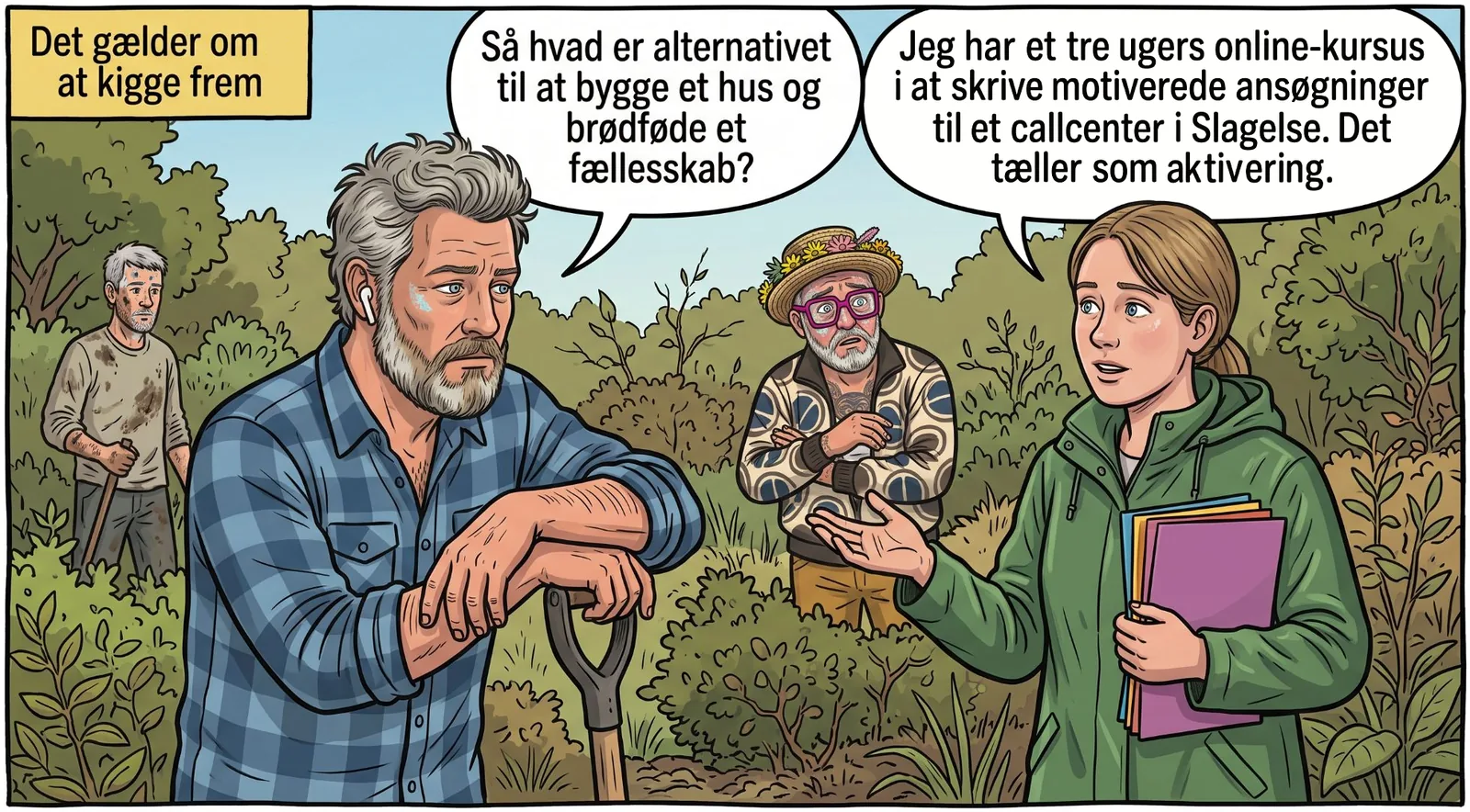
But if we look coldly, cynically and soberly at the research, the illusion falls apart. Independent evaluations and research reports (among them from the National Audit Office and SFI, now VIVE) have pointed out several times that the effect of this massive and expensive effort for the most vulnerable recipients of social assistance is vanishingly small. As early as 2010 the National Audit Office concluded that activating recipients of social assistance who were not ready for the labour market had no positive employment effect at all – on the contrary, in the following years those activated were self-supporting for a smaller share of the time than comparable people who were not activated. Only a few tools, above all wage subsidies in private companies, show clear positive effects in the research. Many of the resources spent do not result in citizens getting a lasting, ordinary job. Often they are simply shuffled around in a parallel system of subsidy schemes. Measured solely by its own criterion of success – creating self-sufficiency through paid work – the effort for the weakest is a resounding, documented failure and a gigantic waste of public money.10
Even the government has now acknowledged parts of the criticism. With the employment reform of April 2025 the requirement for job centres is abolished, the rehabilitation programmes are closed down, and 2.7 billion kroner a year is to be saved once the reform is fully phased in – in an effort that the then Minister for Economic Affairs herself called “the most expensive in the world”. But the reform is a trim, not a reckoning. Nine out of ten sanctions do disappear for the most vulnerable, but the availability requirements and the sanctions system remain for everyone else – a system that in 2014 alone issued almost 100,000 sanctions to recipients of social assistance and education assistance, and that in 2018 operated with 80 different sanction rates – and by far the greater part of the billions stays in the system. Why does the state hold on to the engine room when it demonstrably does not work?11
Surveillance of free time and the ban on generosity
The answer is not that politicians are stupid. The answer lies in the unspoken need of the fiat economy for social control. The zealous surveillance of the free time of the unemployed by the benefit system and the job centres is in reality not about getting people into work at all; it is about ideological discipline.12
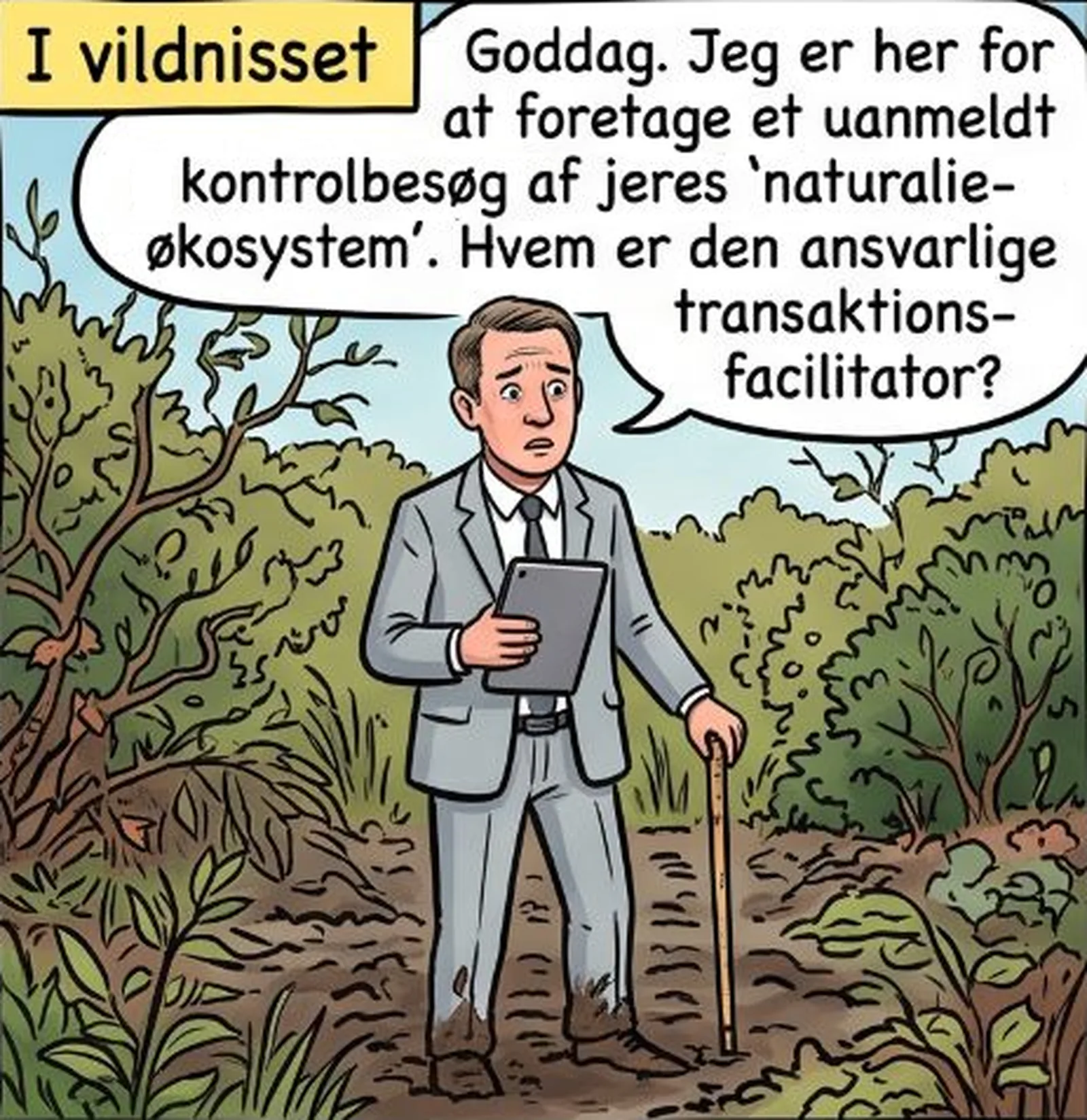
If you read the unemployment benefit guidance from the Danish Agency for Labour Market and Recruitment (STAR), the line for voluntary work is drawn with absurd precision.13 If an unemployed person on benefit chooses to spend a Thursday afternoon helping a local voluntary association with maintenance – for example swinging a paintbrush or repairing a fence – the unemployment fund first has to decide whether the effort is a deduction-free “voluntary activity”, “voluntary, unpaid work” or “primary operation and maintenance”. Each category has its own rule: Work that could have been offered as paid work is only deduction-free for up to 44 hours a month, and tasks of the nature of primary operation and maintenance as a starting point lead to a deduction from the first hour – hour for hour. The state sits with a stopwatch and a calculator: The unemployed person must tell the unemployment fund in writing what work it is and for which association, and keep entering the hours on their benefit card, and the quota turns it into a sum when charity becomes “work” to be deducted.
People are punished when their public spirit exceeds the quota. But why? Because the state cannot bear the emergence of a civil society in which citizens learn that they have an enormous capacity to create value and help one another without wages changing hands. And that capacity is enormous: 40 per cent of Danes over 16 have done voluntary work within the past year, and a sociologist has estimated that the whole voluntary sector, including informal help such as doing the shopping for a neighbour, is worth the equivalent of 13-14 per cent of GDP. Even among recipients of social assistance and disability pensioners, more than one in three has done voluntary work within the past year. If the unemployed were allowed to spend their time and energy building sustainable community houses, growing permaculture and joining time banks (where the accounts are kept without currency), they would very quickly build up an autonomy that is mortally dangerous to the system.14
The time bank is the ultimate threat to the system, because it systematises an account outside the currency of the state. If 60 minutes of work in the garden can be swapped straight for 60 minutes of repairing a car, the state has no price to tax – and so it has invented one. As early as 2006 the National Tax Tribunal ruled that services received through a time bank are not tax-free favours between friends but taxable income, precisely because an account is kept of the hours and because the help is exchanged by virtue of membership of an association.15
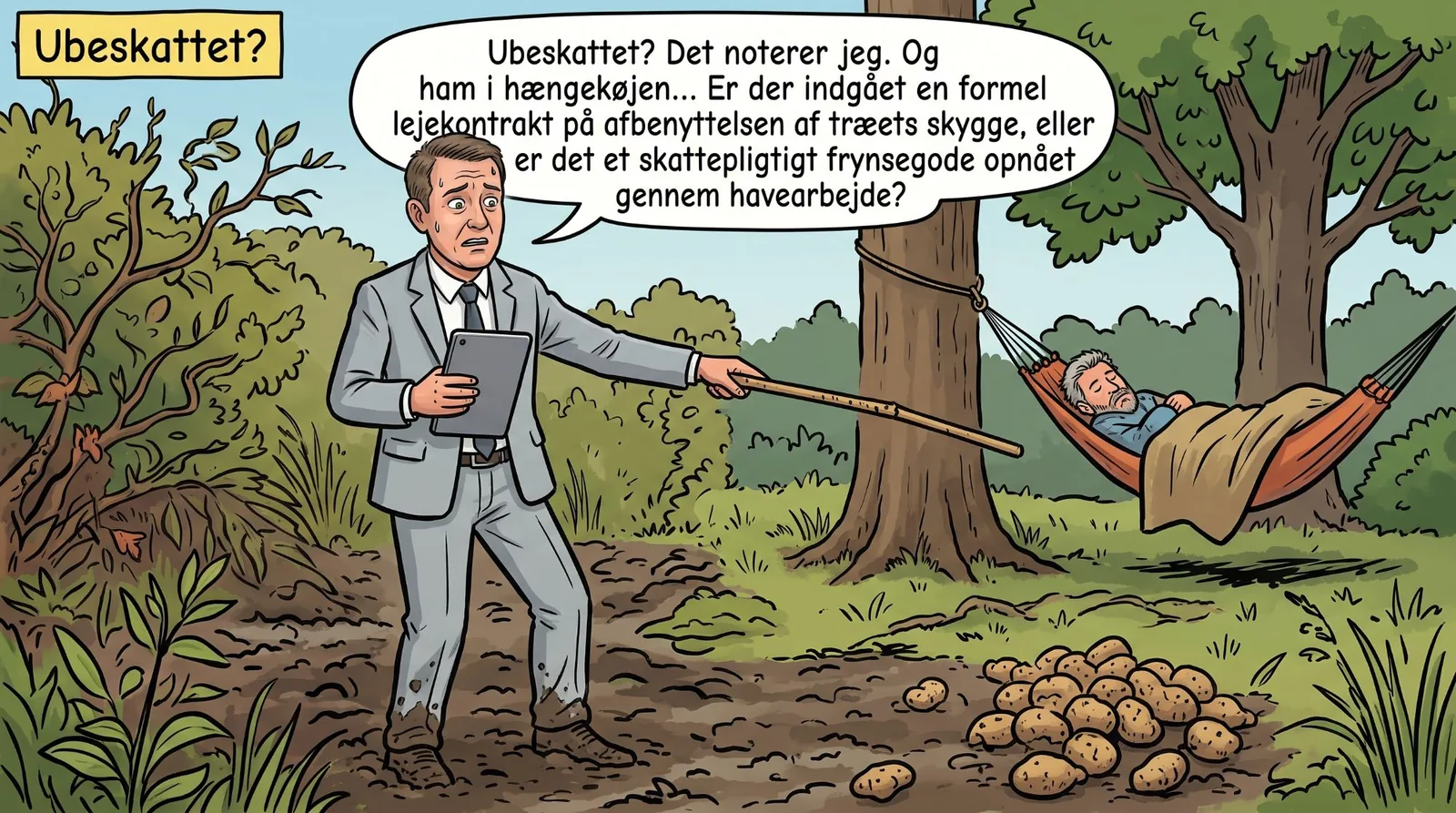
So the billions in the employment system do not primarily provide work. Whatever the intention may be, they function as an enormous surveillance apparatus meant to ensure that people who stand outside the market do not spend their time building an alternative to it. It is financial coercion disguised as social policy.16
The people behind the system – a reckoning with empathy intact
When we direct such an uncompromising, radical and far-reaching critique at these social structures, there is a massive danger we must avoid. We risk becoming embittered. We risk turning our anger on the wrong people. That is why it is a decisive and inviolable principle for any true freedom movement to remember one central thing: The system is not a person.
We must meet the caseworker at the council, the job consultant in the windowless office, the staff member at the unemployment fund and the official at the Danish Tax Agency with radical love and unconditional empathy.
The men and women who sit behind the desks and dutifully inform us that our voluntary communal meals now constitute a “taxable benefit in kind” are not driven by malice. They are not sadists who enjoy crushing idealism. By far the majority of these people entered the social professions and the public system with a genuine, heartfelt and beautiful wish to care for their fellow citizens. They wanted to make a difference.
But they are prisoners. They are imprisoned by exactly the same rigid spreadsheets, the same impenetrable guidelines and the same asymmetrical legislation that the state tries to throw over us. Through decades of New Public Management and a culture of control, their professional judgement has been removed and replaced by algorithms and process requirements.17 The Minister for Employment herself admitted as much when, in February 2025, she presented the reform proposal of the government and said that the way the state governed the area had “got out of hand”. The government's own expert group estimated in 2024 that conducting interviews in the municipalities cost up to 1.8 billion kroner a year – and that caseworkers spent roughly as long recording and documenting an interview as on the interview itself. They are forced to administer a set of rules that springs from the systemic panic of central government.18
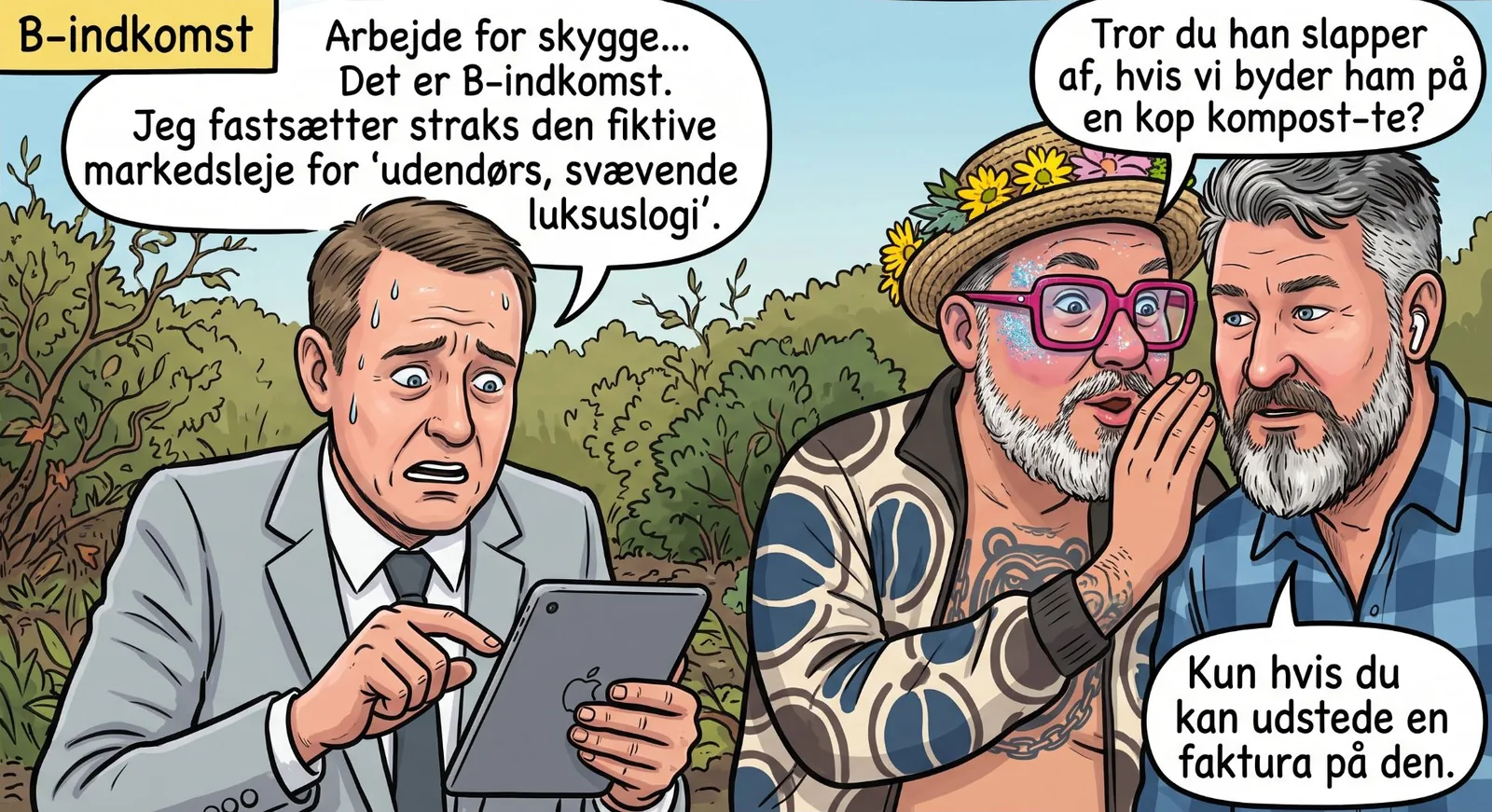
When an unemployment fund officer deducts from the benefit of an unemployed person because the voluntary effort at the clubhouse has burst the hour quota, the officer does so as a bound actor in a machine they did not build themselves, and which often goes as much against their grain as it does against ours. Many caseworkers break down with stress, because there is an unbridgeable gap between their human empathy and the system they are set to administer.19
We are at war with absurd structures, but we must never – never – wage war on the people in them. We must dismantle the logic of the system unsentimentally, but we must not let it contaminate our view of humanity. To demonise the individual behind the counter is merely to fall into exactly the same trap of separation and mistrust that the system itself lives off creating between us. “We fight the spreadsheets, not the people”, as the conclusion must read when the dust settles.
The armour and the ultimate proof of bankruptcy
So we are in a historic situation where we have to act more wisely than we ever have. If we are to succeed in building something outside the system – a place, a building, a culture that refuses to submit to the dictates of money – good intentions are not enough.
We have to put on the armour that the state forces us to wear. We have to separate companies and associations, draw up watertight legal agreements on the use of our land (the Rent Act applies, after all, even if the rent is paid with work, so the volunteer who lives in return for lending a hand can become a tenant in the eyes of the law), let the volunteers pay at least the cost price of the food and the bed themselves, and we must insist on binding rulings from the tax authorities to force the state to leave our arrangements in peace.20 It is absurdity in its purest, most distilled form that we have to pay lawyers and accountants hundreds of thousands of taxable kroner simply to buy ourselves the right not to use money.
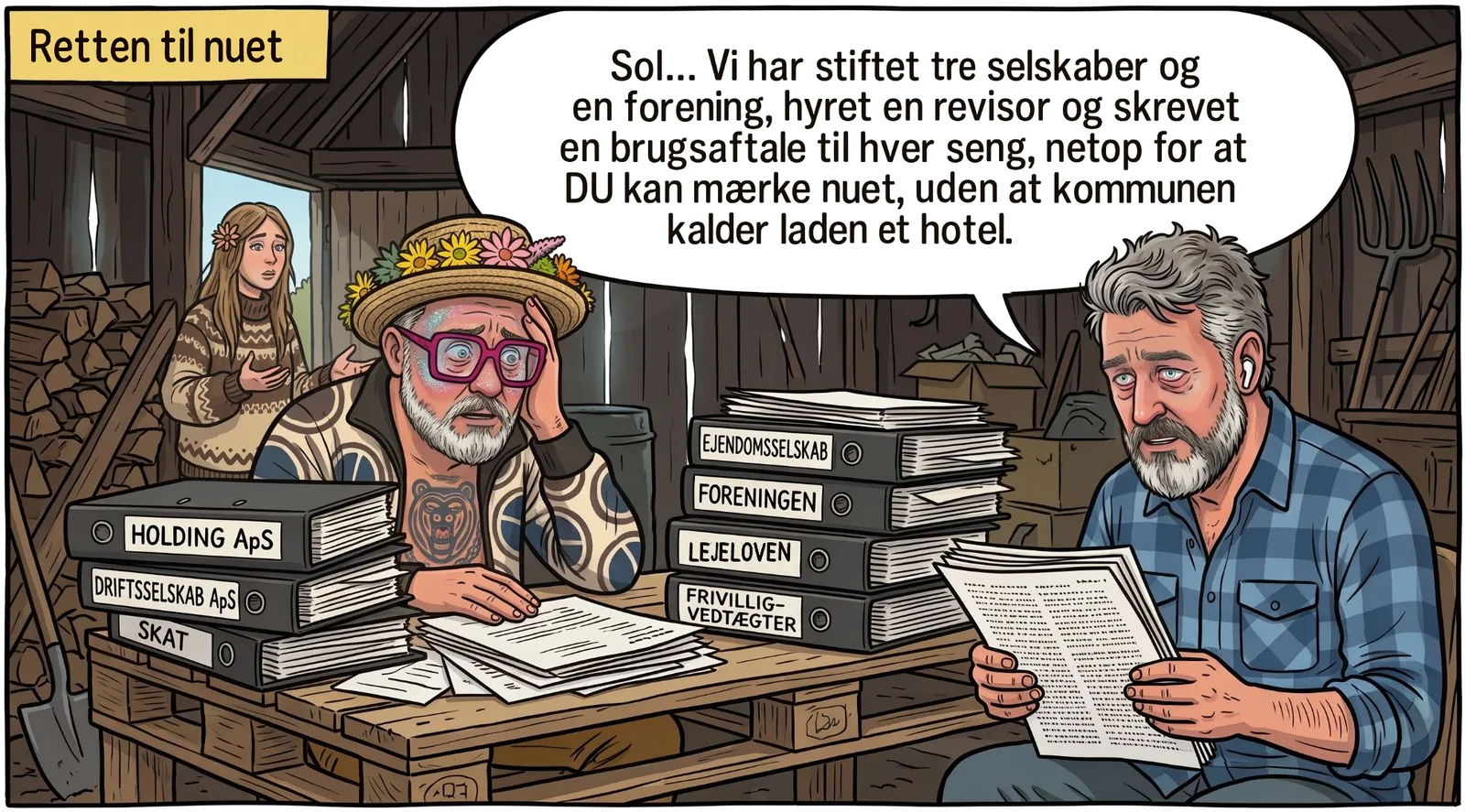
But we must not see this legal defence as a defeat. On the contrary. That a system demands a fortune from those who simply wish to live sustainably, share their resources and show unconditional hospitality is the system's own, ultimate declaration of bankruptcy.
Currency and control are the survival mechanism of the state in a financial world that has mortgaged its own future to the banks and the big financial players – a world where the treasury in the dividend tax case let itself be drained of around 12.7 billion kroner, and where in 2018 the Danish Tax Agency checked the share taxation of only 0.5 per cent of large companies, while the state hunts the small ones. When we build a well-functioning, self-sufficient and moneyless community, we defy this logic. We expose the fiction of the system.21
Our task is to build this alternative solidly and with legal protection, while stubbornly keeping an open heart towards the foot soldiers who work in the service of the state. For the day the debt machine of the fiat economy truly cracks under its own unsustainable weight, it will not be the lawyers or the spreadsheets that save us. It will be the deep social capital we have insisted on keeping in one another. That is the future we are building.
1. The point is sharpened by modern monetary theory (MMT): A state that issues its own currency creates the demand for it by requiring taxes to be paid in that very currency. See Stephanie Kelton, The Deficit Myth (New York: PublicAffairs, 2020), and the entry in the “Reading list”. For Denmark the point is modified by the fixed exchange rate policy against the euro. Reading list
2. See David Graeber, Debt: The First 5,000 Years (Brooklyn: Melville House, 2011), which traces the role of debt as an instrument of power and discipline from antiquity to the present day.
3. SAPRIN, Structural Adjustment: The SAPRI Report – The Policy Roots of Economic Crisis, Poverty and Inequality (London: Zed Books, 2004), based on a joint review with the World Bank: The programmes were meant to earn foreign exchange through exports, “The maintenance of debt servicing and stabilization were non-negotiable elements of all the adjustment programs studied”, and in several of the countries export crops had “replaced cultivation of food crops for local consumption”. On the conditions of the IMF, see also Joseph E. Stiglitz, Globalization and Its Discontents (New York: W.W. Norton, 2002).
4. Karl Polanyi called land, labour and money “fictitious commodities”: things that are not produced for sale but that market society treats as if they were. Karl Polanyi, The Great Transformation (New York: Farrar & Rinehart, 1944), chapter 6. Danish introduction: Christian O. Christiansen, «Karl Polanyi og utopien om det fri marked» (Karl Polanyi and the utopia of the free market), Slagmark no. 64 (2012). tidsskrift.dk
5. Under section 4 of the Danish State Tax Act, all income is as a rule taxable, including income received in kind. If benefits in kind are given for work, they are as a starting point valued at market value, that is, what they would cost “in ordinary free trade” (section 16(3) of the Danish Tax Assessment Act). Tax exemption for favours between family and friends follows from section 7 Å(1) of the Tax Assessment Act and requires, among other things, that the service is customary and takes place within the private sphere. Practice shows, however, that the structure is decisive: In SKM2011.723.SR the Danish Tax Council confirmed, after an enquiry from a course and cultural centre, that its volunteers were not to be taxed on board, lodging and courses, because they paid for them themselves: 180 kroner a week for two meals a day, which at least covered the cost of production, 200 kroner a week for a bed and 36 kroner per course hour. In SKM2013.150.SR volunteer “meal friends” could receive a tax-free allowance under section 7 M of the Tax Assessment Act for the meal they ate with an elderly person. Tax Assessment Act · SKM2011.723.SR
6. INSEE, Informations Rapides no. 239, 29.9.2026, on the Maastricht debt in the second quarter of 2026: 3,595.5 billion euros, equivalent to 119.0% of GDP. This is the highest in INSEE's quarterly series, which begins in 1995; the previous peak was 117.8% in the first quarter of 2021. On the purchase programmes: ECB, “Asset purchase programmes” and “Pandemic emergency purchase programme”. The APP began in October 2014 and included government bonds from March 2015, and the PEPP began in March 2020. Net purchases ended in 2022, and the Eurosystem has since reduced its holdings, under the APP from 2023 and under the PEPP from 2024. At the end of September 2026 around 3,300 billion euros were still held in the two programmes. INSEE · ECB, APP · ECB, PEPP
7. The Friland cooperative in Feldballe on Djursland was founded in 2002 and has freedom from debt as a central goal: according to its statement of principles, you build “your own house without debt”, and residents cannot take out loans secured on the land or the houses. See also the “Reading list”, the theme “Those who tried”. friland.org
8. Statistics Denmark, Nyt fra Danmarks Statistik no. 101, 27.4.2026 (the April report): general government (EMU) debt was 27.9% of GDP at the end of 2025, and the public balance showed a surplus of 88.5 billion kroner (2.9% of GDP), the second largest in the EU after Cyprus (Eurostat, 22.4.2026). Statistics Denmark has since revised the 2025 surplus upwards. Through the fixed exchange rate policy the krone is pegged to the euro. Statistics Denmark · Eurostat
9. Kristeligt Dagblad/Ritzau, «Regeringen vil spare tre milliarder i nyt beskæftigelsesudspil» (The government wants to save three billion in new employment proposal), 5.2.2025: “The state spent around 11.5 billion kroner a year on employment policy in 2024.” The Ministry of Employment itself puts the active effort at 11.7 billion kroner in 2023, and most of it is municipal spending. With the “Agreement on a reform of employment policy” of 9.4.2025 the requirement for job centres is abolished, rehabilitation and job clarification programmes are closed down, and spending is to be cut by 2.6 billion kroner in 2030 and 2.7 billion kroner permanently. The then Minister for Economic Affairs, Stephanie Lose (Liberal Party), called the effort “the most expensive in the world” at the presentation; Altinget, «Ungeløft og milliardbesparelse: Her er de 31 tiltag i ny jobreform», 9.4.2025. Kristeligt Dagblad · The agreement · Altinget
10. National Audit Office of Denmark, Beretning til Statsrevisorerne om effekten af aktivering af ikke-arbejdsmarkedsparate kontanthjælpsmodtagere (report no. 1/2010, October 2010), which found negative effects on self-sufficiency and employment for all types of measures in 2006. The conclusion is repeated in, among others, SFI, Ressourceforløb. Koordinerende sagsbehandleres og borgeres erfaringer (Mehlsen, Holt, Bach and Thörnfeldt, 2015). On wage subsidies: Danish Agency for Labour Market and Recruitment, Litteraturgennemgang: Hvad virker for at få borgere længere fra arbejdsmarkedet i job? (2025), which points to “private wage subsidies in particular”, while the effects of public wage subsidies are “less clear-cut”. National Audit Office · STAR
11. The number of sanctions for recipients of social assistance and education assistance was 97,986 in 2014 according to the Danish Agency for Labour Market and Recruitment. In 2018 the social assistance area had 80 different sanction rates; Ministry of Employment, fact sheet «Konsekvente sanktioner og styrket kontrol med offentlige forsørgelsesydelser» (March 2018). The 2025 reform agreement promises that “Nine out of ten sanctions disappear for vulnerable citizens”. In a sample of 61 cases on tightened availability sanctions, the National Social Appeals Board would in 2023 have changed the decision in 52 (85%), including all 26 cases involving people ready for activity; National Social Appeals Board, Sanktioner 2 – Resumé af en praksisundersøgelse (April 2023), and DR, «Pres på minister: Tusindvis af straf-sanktioner mod kontanthjælpsmodtagere bør kulegraves» (13.5.2023). The fact sheet · DR
12. Cf. Michel Foucault, Discipline and Punish: The Birth of the Prison (orig. Surveiller et punir, 1975; Danish edition Det lille Forlag, 2002), on discipline through registration, normalisation and the control of time.
13. Executive Order no. 39 of 12.1.2026 on the payment of unemployment benefit, sections 15(4) and 17, and the Guidance on the payment of unemployment benefit, VEJ no. 9127 of 20.1.2026. Voluntary, unpaid work that can be offered as paid work is deduction-free for up to 44 hours a month; work beyond that leads to a deduction. Primary operation and maintenance as a starting point leads to a deduction from the first hour, but in “smaller” organisations occasional maintenance can be deduction-free under five conditions; the example in the guidance is “Painting the clubhouse or the scout hut”. The member must inform the unemployment fund in writing of the nature of the work and of the organisation, and keep entering the hours on the benefit card (section 17(8)). The rules are based on the “Agreement on new rules on deductions in connection with voluntary work” of 26.8.2017 (Act no. 1540 of 19.12.2017). See also “Two brushes”. The executive order · The guidance
14. VIVE, Frivillighedsundersøgelsen 2024 (The volunteering survey 2024, 2025): 40% of the population over 16 had done voluntary work within the past year, 45% if time-limited volunteering and online voluntary work are also counted. Among recipients of social assistance and disability pensioners the share was 35% (2020: 30%) against 46% in the rest of the population, on the broad measure. Sociologist Thomas P. Boje in Kristeligt Dagblad, «Frivillighed er en milliardgevinst for samfundet» (30.9.2021): 13-14% of GDP when the whole sector and informal help are included; it is an estimate given in an interview, and the value is not part of GDP. The published figure of Boje for unpaid voluntary work alone is 2.6% of GDP (Boje and Ibsen, Frivillighed og nonprofit i Danmark, SFI 2006). See also Mikkel Thorup, Fællesøkonomi (Informations Forlag, 2022), and Emma Holten, Underskud – om værdien af omsorg (Politikens Forlag, 2024), both in the “Reading list”. For recipients of social assistance there is no hour limit on voluntary, unpaid work, as long as it does not prevent them from being available and is not work that is normally offered as paid work; the municipality assesses each case (VEJ no. 9332 of 12.6.2020; cf. the answer of the Minister for Employment to BEU alm. del question 206 (2019-20)). VIVE · Kristeligt Dagblad
15. Ruling of the National Tax Tribunal of 18.8.2006, SKM2006.573.LSR («Timebank konceptet – skattefrie vennetjenester»): The services were not tax-free favours between friends, “as a systematic account is kept of the services of the participants”, and because the participants help each other “by virtue of their membership of the time bank association”. Today the scheme would fall under section 7 Å(1), no. 2, of the Tax Assessment Act on “organised barter”. info.skat.dk
16. The concept is close to the analysis by Søren Mau of “the mute compulsion of economic relations” in Stum tvang (Klim, 2021; in English as Mute Compulsion, Verso, 2023). On the attempts at time banks in Denmark: Timepuljen in Herlev swapped hours from the late 1980s, and a time bank project in western Aarhus never got off the ground, because the tax authorities in 2005 would not make the exchange tax-free. See also the “Reading list”, the theme “The gift, and the other kinds of money”. timebank.dk
17. Since the end of 2015 the profiling tool of STAR has calculated the risk of long-term unemployment for newly unemployed people on unemployment benefit based on, among other things, age, benefit history and origin (Danish Data Protection Agency, statement to STAR, 5.7.2019). In the evaluation of the pilot project, just over half of the participating job centres considered that the tool provided a good basis; Mploy for STAR (BEU alm. del 2017-18, appendix 407), quoted in Version2, 15.5.2019. See also Arbejderen, «Forskere vil lave ny algoritme til hjælp for sagsbehandlerne og de arbejdsløse» (2021). Danish Data Protection Agency · Version2
18. The Expert Group on the future employment effort, Anbefalinger til fremtidens beskæftigelsesindsats (Ministry of Employment, June 2024): “Overall, it is estimated that conducting interviews in the municipalities costs up to DKK 1.8 billion a year”, and recording and documentation take roughly as long as the interview itself. The expert group recommended halving the special rules in the Act on an active employment effort. Minister for Employment Ane Halsboe-Jørgensen (Social Democrats) on the proposal: Kristeligt Dagblad/Ritzau, 5.2.2025. The report · Kristeligt Dagblad
19. A COWI survey for the Danish Association of Social Workers (2018) found that 35% of social workers in the municipal employment departments were stressed all or most of the time, against 16% of employees in general. In the working conditions survey of the association from 2025, 28.2% of social workers said they had felt stressed all or most of the time within the past two weeks. 2018 · 2025
20. The Rent Act applies “even if the rent is to be paid with something other than money, including work” (Rent Act, section 1(2)). A volunteer who lives in return for lending a hand can therefore become a tenant in the eyes of the law. This requires that the right to use the home is the main element of the agreement, and housing with full board is exempt (section 1(3)). Binding rulings are given by the Danish Tax Agency, in cases of principle by the Danish Tax Council, under chapter 8 of the Tax Administration Act. By comparison, an association may pay a maximum of 10,000 kroner a year (2026) tax-free to an unpaid volunteer for undocumented expenses for phone, internet, administration and special clothing, and only for expenses the volunteer has incurred on behalf of the association. The rate is a single combined rate in section 7 M(1) of the Danish Tax Assessment Act, adopted by the Danish Parliament on 12.11.2026 (L 36 A) with effect from 1.1.2026. Before, there were three rates totalling 6,800 kroner. If the allowance exceeds the rate, all the allowances still become taxable (Executive Order no. 1185 of 19.11.2024, section 5, and the explanatory notes to L 36). Cf. also SKM2011.723.SR, where the meals of the volunteers did not trigger tax because they themselves paid at least the cost of production. On the place on Agersø see “From transaction to relationship”. The executive order · L 36 A as adopted
21. According to the Danish Tax Agency, the treasury was subjected from 2012 to mid-2015 to suspected fraud with refunds of dividend tax of around 12.7 billion kroner. Sanjay Shah was sentenced on 12.12.2024 to 12 years in prison by the District Court in Glostrup for fraud of just over 9 billion kroner; the judgment has been appealed. National Audit Office, Beretning om Skatteministeriets indsats på aktieområdet (6/2019): the Danish Tax Agency selected 18 large companies for checks in 2018 because of risk in share taxation, equivalent to 0.5% of the risk-assessed large companies. See also National Audit Office, Beretning om Skatteministeriets kontrol af selskabsskatten for store selskaber (1/2022). Danish Tax Agency · National Audit Office 6/2019