Cold, hunger, sweat, skin and sleep are some of the oldest ways of feeling the body. What happens to them when they are measured, logged and shared? The animals do the same, without an audience.
That wasn’t quite what we agreed
We bought little helpers to keep track of our bodies. These days we also keep half an eye on whether the helpers are happy.
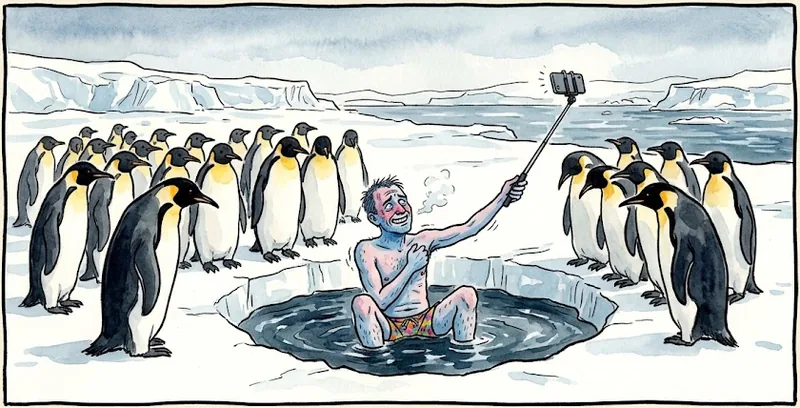
A winter swim can be an honest way home to the body. But when the phone comes down into the ice water too, the cold shock becomes proof of willpower for the network. On the difference between feeling the body and displaying it.
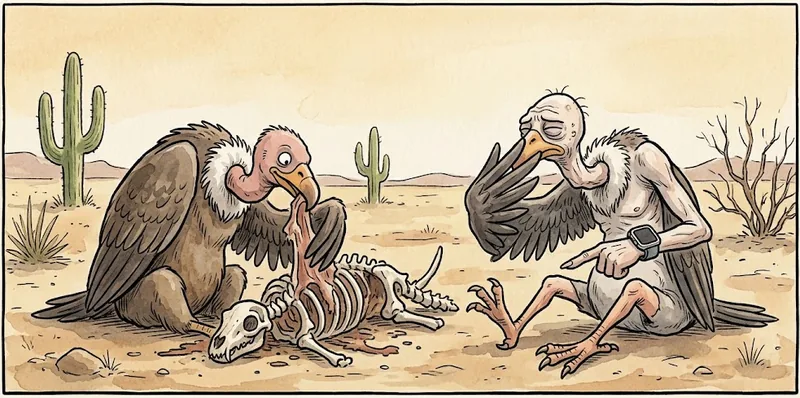
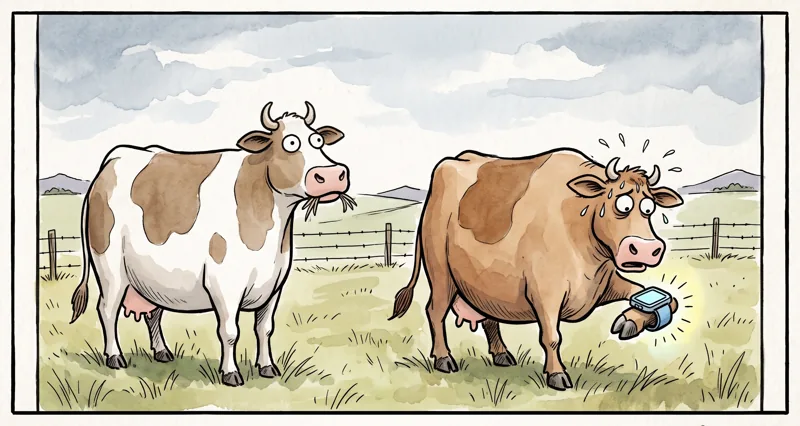
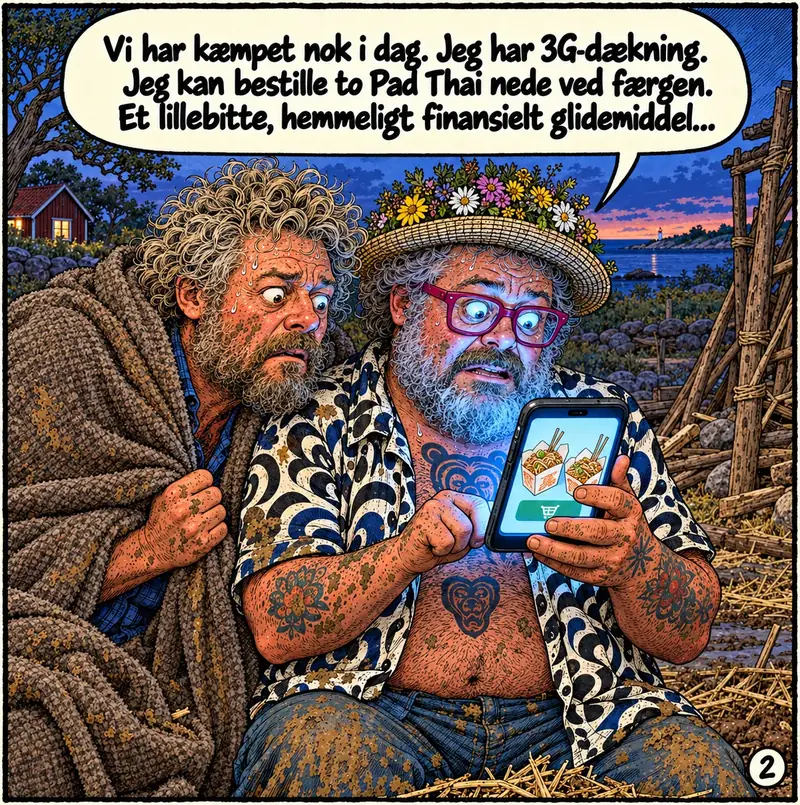
Fasting is an ancient practice, but intermittent fasting has turned hunger into an app with streaks and confetti. On letting a watch decide when the body may eat, and on taking that decision back.
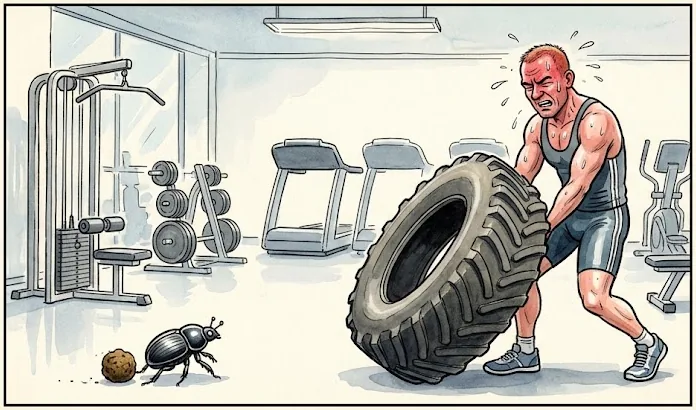
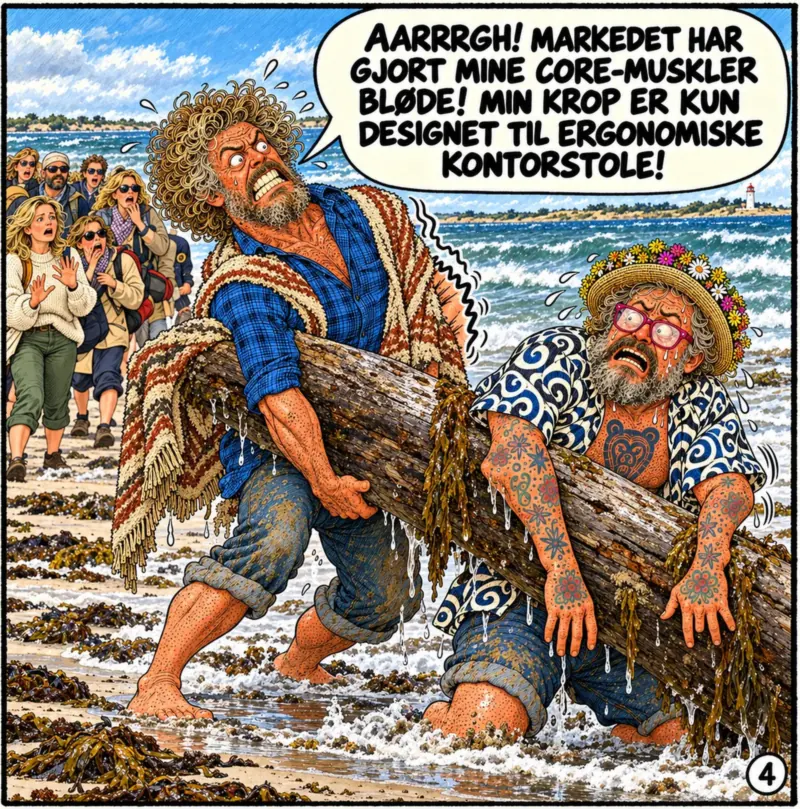
The dung beetle’s toil has a purpose. Ours often has only an audience. On extreme sport as an executive discipline, training as symbolic capital, and the difference between movement out of love for the body and movement for the market’s sake.
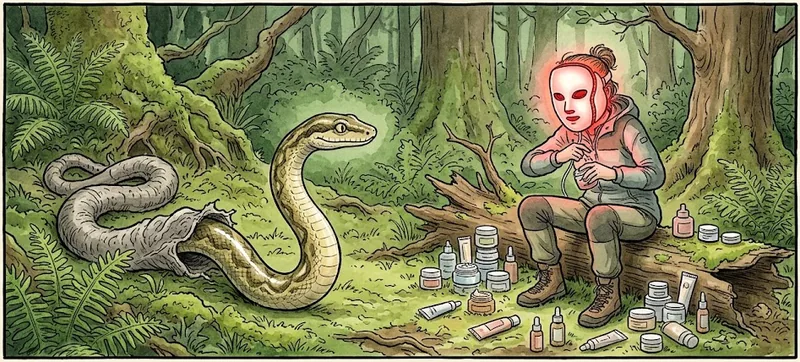
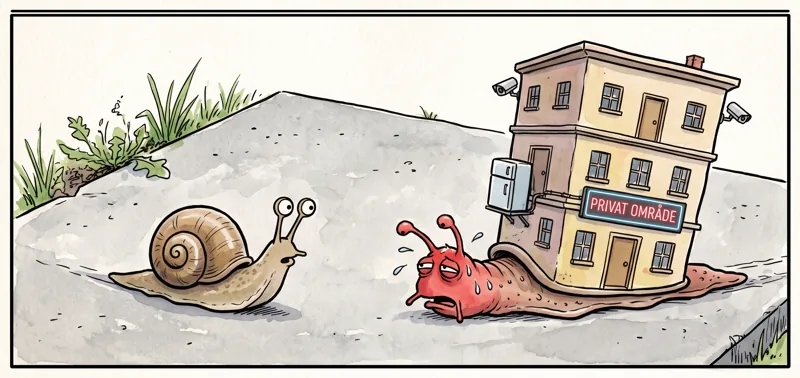
The snake sheds its skin without giving it a thought. We smear ourselves in snail slime and light our faces up red to keep decay at bay. On the fear of decay as a business, on the aesthetics of the smooth, and on celebrating bodies that look as though they have lived.
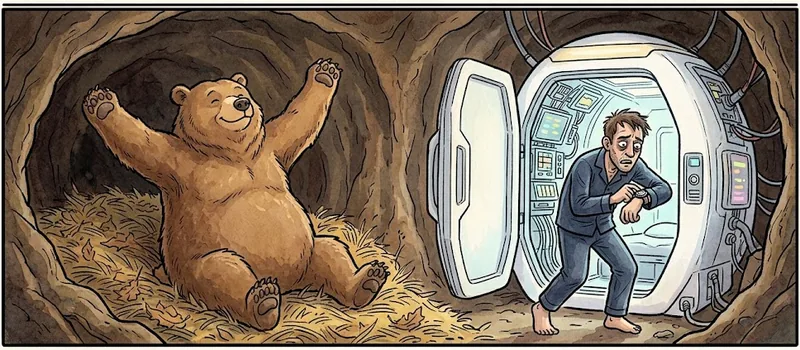
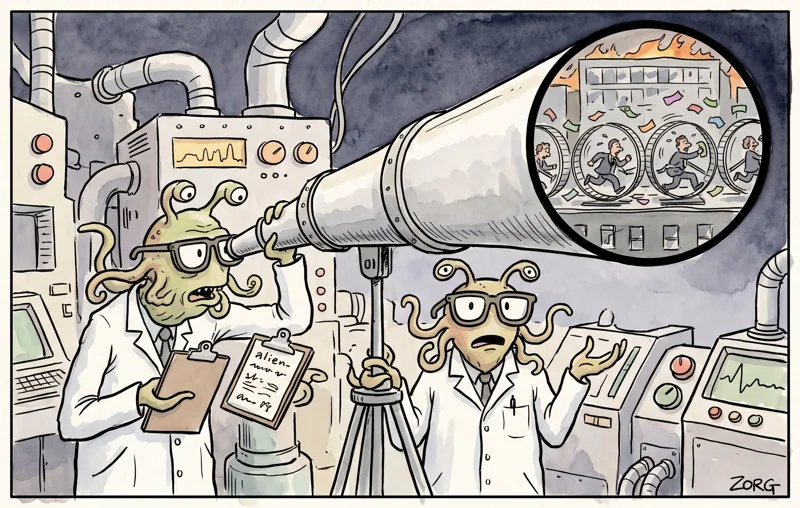
Sleep was the last free space the market could not reach. Now it is measured in readiness scores and restorative deep sleep. On sleep trackers, the Nordic winter dark and the bear that hibernates without asking anyone’s permission.
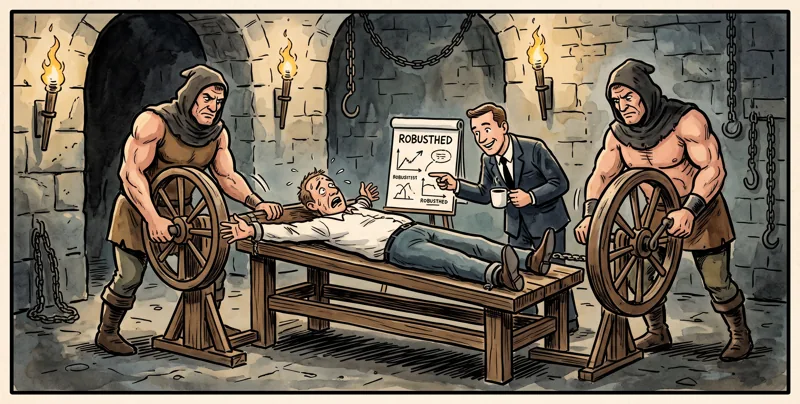
The body has become a production apparatus to be optimised and refuelled. On privatised stress, and on what happens in the nervous system when the KPIs and the price tag are left behind at the ferry landing on Agersø.
Series · 4 pieces
The market and the unmeasurable
On what the market cannot see: relationships that are not deals, and other half of reality that cannot be counted.
Five concepts from Mark Fisher’s Capitalist Realism, as we read them: reflexive impotence, depressive hedonia, the privatisation of stress, business ontology and market Stalinism. They recur in the conversations.
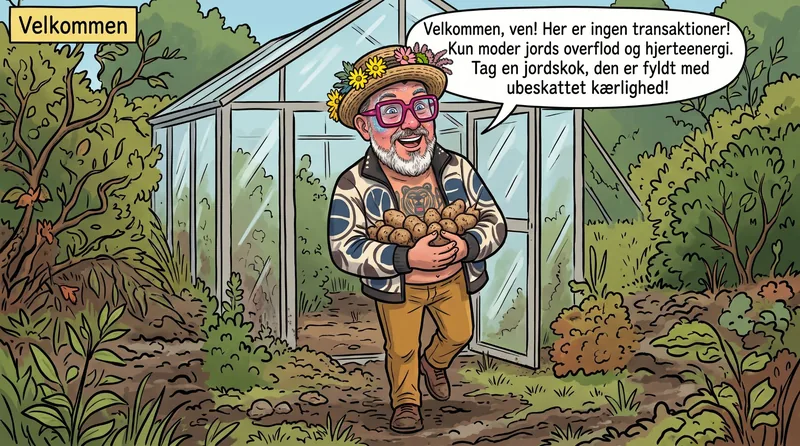
When there is a price tag between us, we become either the one who provides or the one who consumes. On a place kept free of the bank, where the only currency is time, soul and hands.
The market masters what can be counted and is blind to the rest. With the four quadrants of the integral model as a lens: on the invisible half of reality, the I and the we, which cannot be bought, only created.
Money holds us in immature roles in which relationships become a power game. On the ascending and the descending forces, and on what is asked of us when you cannot pay your way out of caring.
Series · 3 pieces
Friction
Three pieces on what money removes when it removes the hassle: the need for each other. From the 3D cinema to raw theatre, from the Climate Movement to Vendhjem, from the mask to the face.
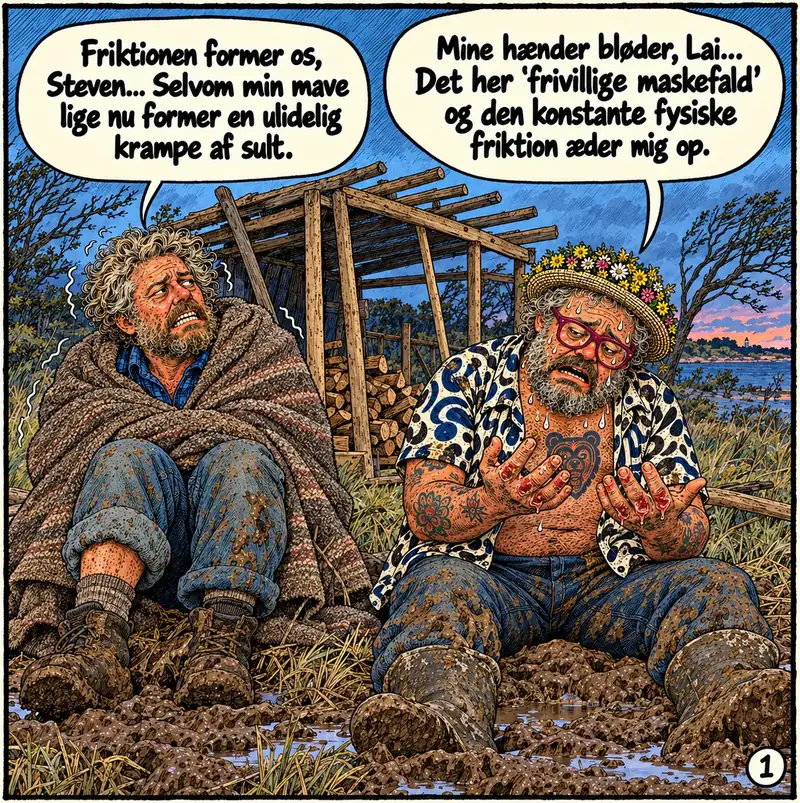
A beep, and the food is at the door. Money has removed the hassle, and with it the resistance that shapes us. On raw theatre after the 3D cinema, and on choosing friction when you could have bought your way out.
Fossil energy and capital promise the same thing: not having to feel the world. On two addictions with one mechanism, on the Climate Movement and Vendhjem as two flanks of the same army, and on a withdrawal that cannot be bought.
Money promises that we never have to ask anyone for anything. But those who need no one cannot be received either. On Løgstrup's demand, Mauss's gift and Rosa's resonance, and on taking off the mask.
Series · 2 of 6 pieces
The Yardstick
An indictment in six parts, and a manual. Not of the welfare state, but of the yardstick our rules have borrowed from the market and hold up against everything, including what was never for sale.
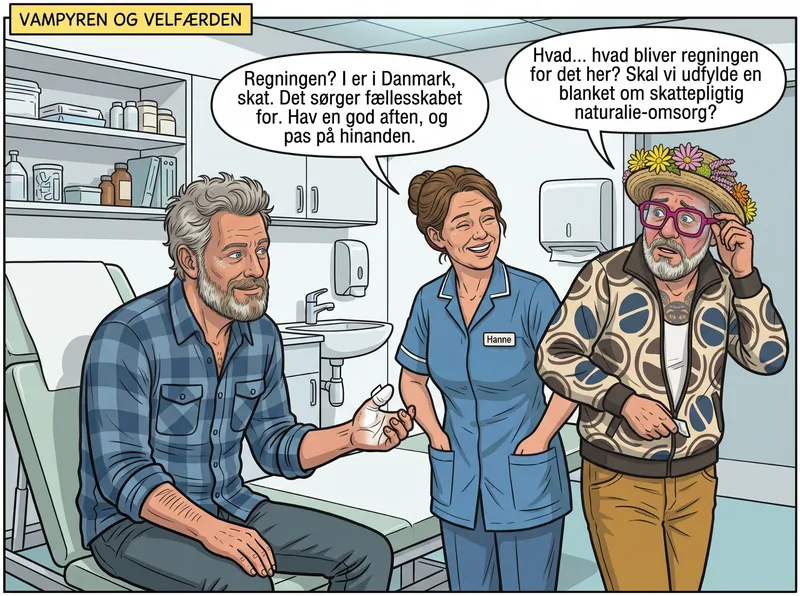
Part one of The Yardstick. The same state that stitches your thumb without sending a bill cannot look at a guest bed without asking what it would cost in ordinary free trade. About a gift culture that had to ask the Danish Tax Council whether 200 kroner a week was enough.
Part two of The Yardstick. The compelled brush may only paint what nobody would pay for. The voluntary brush is penalised if it paints something somebody could pay for. About unemployment benefit, community work, one krone too many and a fifteen-year-old who may take cash.
Why does a rich state react with almost absurd resistance to communities that share without money? On debt as an instrument of power, on the billions in the employment system, on the time bank the state put a price on, and on meeting the people behind the counter with an open heart.