The market and the unmeasurable, part 4 of 4 · 5 min
The transactional straitjacket – the way to brave and mature relationships
By Steven Wensley, MA in history, and poet.
In our modern society, money has become the universal language of human interaction. We use it not merely to exchange goods but to regulate distance, power and obligation between us. Money gives us an illusion of freedom, but in reality it often works as an invisible straitjacket that holds us in asymmetric and immature power relations. When we can buy anything – from cooking to care – we lose the ability to enter into real, committed communities. We reduce complex human contact to a simple trade. At Vendhjem we try to break this logic. By creating a sanctuary from market forces, where the only means of payment is time, soul and hands, we are forced to confront the relational dynamics that money normally shields us from.
The power struggle of the immature market
To understand how money poisons our relationships, we can glance at the psychological relationship map of human behaviour. A society driven by market forces has an inherent tendency to reward us for, and hold us in, what are described as “Immature Feminine” and “Immature Masculine” dynamics. In this field of tension, relationships are reduced to a constant “Power-struggle”, which is fundamentally draining of love and life energy (“Love-draining”).
In this immature space, immature masculinity acts by “taking over” and laying claim (“Provides / Claims”). It takes without consent, becomes excessively responsible and ends up shutting down or detaching emotionally (“Fights, detaches, immobilised”). Opposite it stands immature femininity, which adapts and seeks security through submission (“Acquires / Acquiesces”). Here true responsibility is avoided, and the behaviour becomes instead codependent, “Needy” and “Superficially friendly”.
Capitalism is, in essence, built on precisely this polarised dynamic. Money becomes the ultimate tool for exercising immature masculine control or immature feminine abdication of responsibility. When we pay our way out of a problem, we avoid real, vulnerable contact. We are held in rigid “Social roles”, in which we either buy ourselves power or sell our time and autonomy for security. It creates a false independence in which we are isolated, cynical and unable to meet one another cleanly.
The imbalance between the ascending and the descending
This immature dynamic is reinforced by the market society’s extreme overemphasis on one particular type of human quality. If we look at the archetypal polarities, we see a division between “Ascending” and “Descending” forces. The goal for a healthy person and a healthy society is “Two forces – one whole”, a balance of Yin and Yang.
But the money economy celebrates almost exclusively the “Ascending” qualities: autonomy, consciousness, exclusion, simplicity and justice. We admire the independent, self-made individual who has earned their own money (autonomy) and can buy themselves a simplified life free of troublesome obligations (simplicity and exclusion).
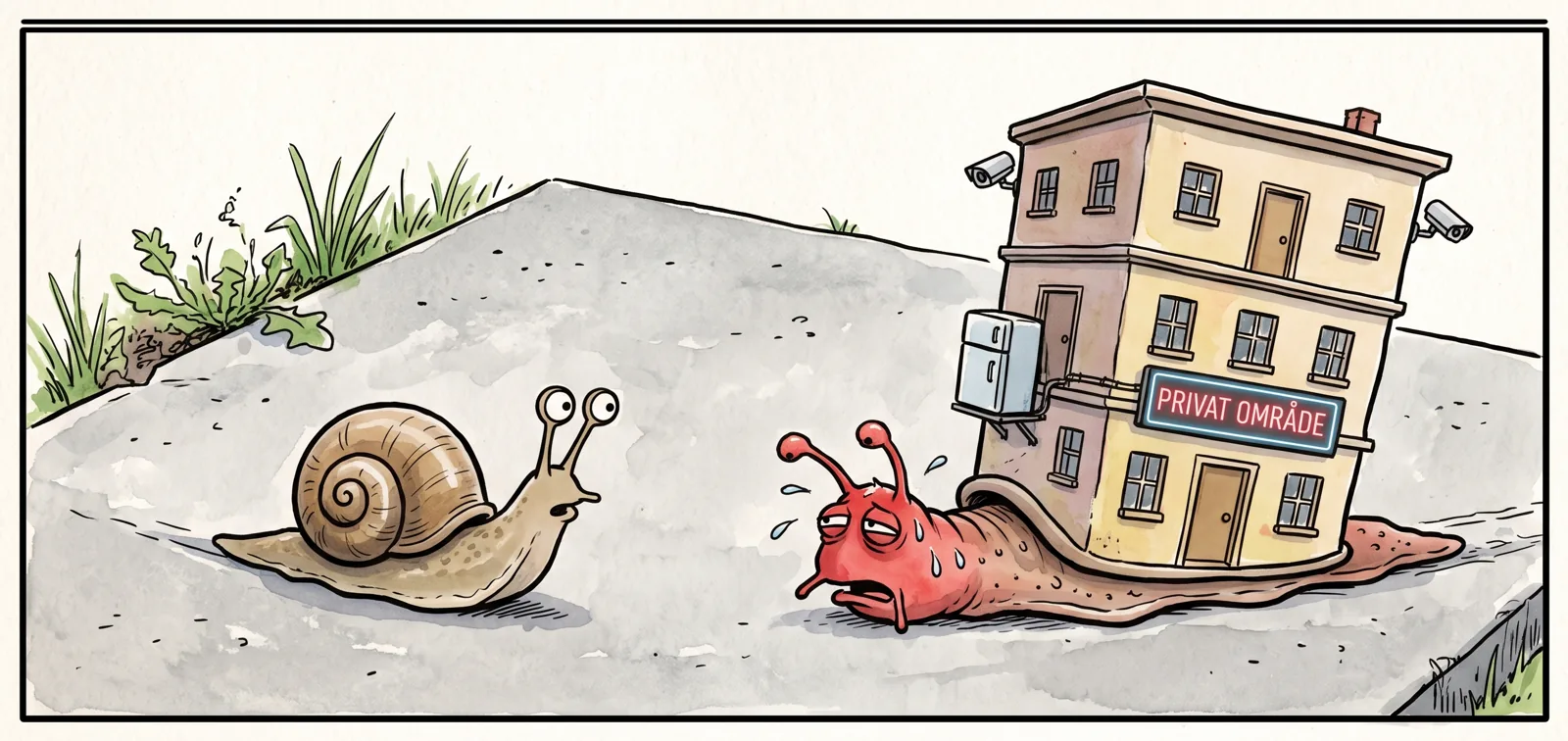
At the same time, the market systematically undervalues the “Descending” qualities: community, life energy, inclusion, complexity and care. Because care and real community are complex and messy, they are incredibly hard to price and make efficient. So the capitalist system pushes these soft, descending qualities out to the margins. The result is an amputated humanity. When we cultivate only autonomy and exclusion, we end up in the epidemic loneliness and stress we see today. We lack the life energy and the community that arise only when we dare to lean into unpredictable, awkward contact with other people.
From transaction to co-creation at Vendhjem
When we at Vendhjem forbid money as the price of admission and insist that you can only co-create your way in, with time, soul and hands, we remove the safety net that the transactional straitjacket provides. You cannot buy yourself autonomy, and you cannot pay others to do the troublesome caring.
This radical spanner in the works forces us out of the immature roles and into what the relationship map calls “Love-generating” and “Power-sharing”. To make a moneyless community work, we have to step up into the “Mature Masculine” and the “Mature Feminine”.
Mature masculinity contributes clear boundaries and healthy communication here (“Boundaries & communication”). In a community where people build and live together, it is vital to be able to communicate clearly and set limits on one’s own energy without becoming aggressive or distant. One learns to give freely and rest in oneself (“Bestows / Asserts”) rather than to demand.
Alongside this, we must cultivate mature femininity, which brings “Empathy & acceptance”. Here we become receptive and nurturing (“Receptive / Nurtures”) and dare to enter into a genuine, “Supportive” connectedness instead of merely seeking validation. When these mature poles meet, what the map calls “Authentic Fluidity” arises – an authentic flow in which we are anchored in the body (“Embodied”) and can move between leading and following without losing ourselves.
The balance between autonomy and surrender
The true critique of the money society is not merely that money is unfairly distributed, but that it instrumentalises us and robs us of our depth. Co-creation takes courage. It requires us to be “Honest & vulnerable” rather than “Superficially friendly”.
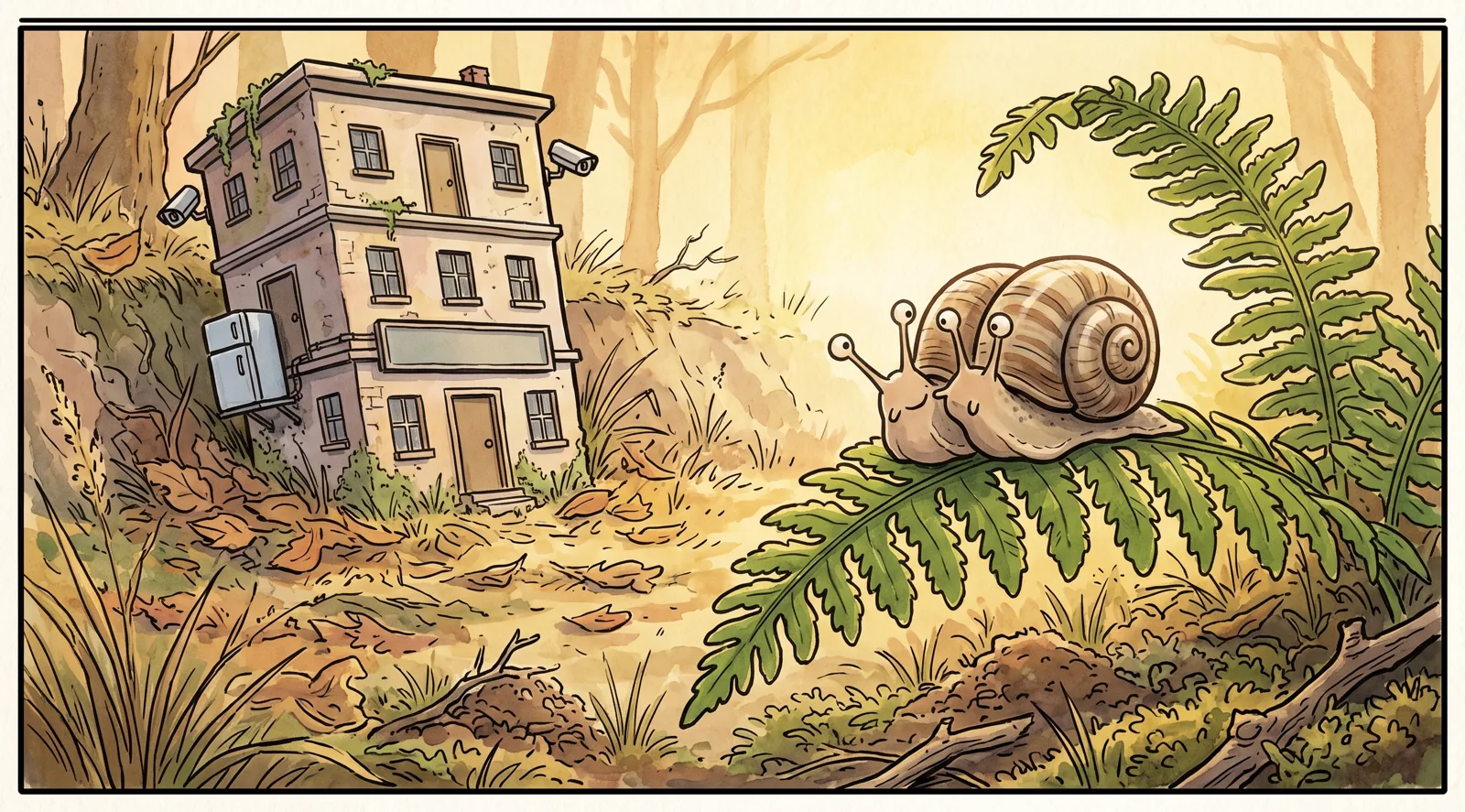
To create the place Vendhjem strives to be, we have to insist on the whole. We must have the courage to hold on to a strong inner autonomy (Ascending), so that we do not lose ourselves in the group. But we must at the same time have the courage to surrender to complexity, care and community (Descending).
When we remove money, we remove the possibility of fleeing from one another. We are left with sweat on our brows, a meal on the table and the raw necessity of making the relationships hold. This is where competition dies and creativity can truly flourish. It is in this honest meeting between people at rest in their mature, authentic strength that we can truly feel we are alive. And it is precisely this balance that money cannot buy.